ZIP Screen Wind and Fabric Guide for Exterior Shading Projects.
How to specify ZIP screens by wind exposure, fabric openness factor, cassette access, control type and project use case before choosing Tela 100, 100M, 100S or 100T.
A ZIP screen is only as good as the match between wind exposure, fabric choice and control method. The same product family can work as facade solar control, pergola side enclosure, retrofit window shading or horizontal top screen, but each use case needs a different specification route.
This guide focuses on the technical decisions behind the Luxa Tela 100 ZIP screen family: wind exposure, fabric openness factor, cassette access, control type and integration with pergolas or glass verandas.
Start with exposure, not colour
Many projects begin with fabric colour. That is understandable, but it is the wrong first question. Start with exposure:
- Is the screen on a sheltered ground-floor facade or a windy upper floor? - Is it protecting a pergola side, a window opening or a glass veranda? - Does the client need privacy, glare control, cooling-load reduction or rain-side comfort? - Can a service technician access the cassette and guides after installation?
Only after those answers should the fabric, motor and cassette finish be selected.
Wind resistance and ZIP-guided side channels
The ZIP guide is the reason exterior screens can stay usable in stronger wind than loose roller blinds or awnings. A zipper strip on both fabric edges runs inside aluminium side channels, keeping the cloth tensioned and preventing the edge from pulling out of the guide.
For real projects, do not treat the quoted wind rating as a universal promise. Wind rating depends on screen width, height, guide fixing, substrate quality, cassette position and local turbulence. A narrow window screen behaves differently from a wide pergola side screen.
For exposed sites, combine the product data with a first-pass site check in the wind and snow specifier calculator. For broader structural context, use the standards hub.
Fabric openness factor
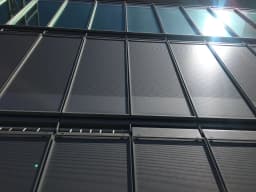
Openness factor describes how much open area exists in the weave. Lower openness blocks more glare and heat; higher openness preserves more outward view.
Typical selection logic:
| Openness factor | Best use | Trade-off | |---|---|---| | 1% | Strong glare control, privacy, west/south facades | Darker interior feel | | 3% | Balanced shading and outward view | Medium privacy | | 5% | Better view, softer daylight | Less glare control | | 10% | View-first spaces and mild exposure | Lower heat reduction |
Dark fabrics usually improve outward visibility because they reduce internal reflection. Light fabrics can feel brighter indoors but may show more glare and deliver less view-through contrast.
Product route: which Tela model fits?
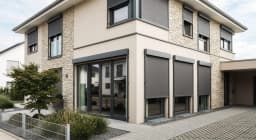
Use Luxa Tela 100 when the project needs a motorised exterior screen with normal electrical access. It is the default for facade windows, pergola sides and high-use residential or hospitality spaces.
Use Luxa Tela 100M when the client wants a manual screen or there is no need for automation. It suits smaller openings, secondary terraces and budget-sensitive projects where a crank is acceptable.
Use Luxa Tela 100S for retrofit situations where wiring is expensive or disruptive. The solar-powered route is especially useful on finished facades where running cable would create more cost than the screen itself.
Use Luxa Tela 100T for horizontal top-screen applications under pergola or veranda roof zones. This is not a normal vertical facade screen; the fabric tension and mounting logic are different.
Pergola and veranda integration
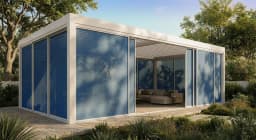
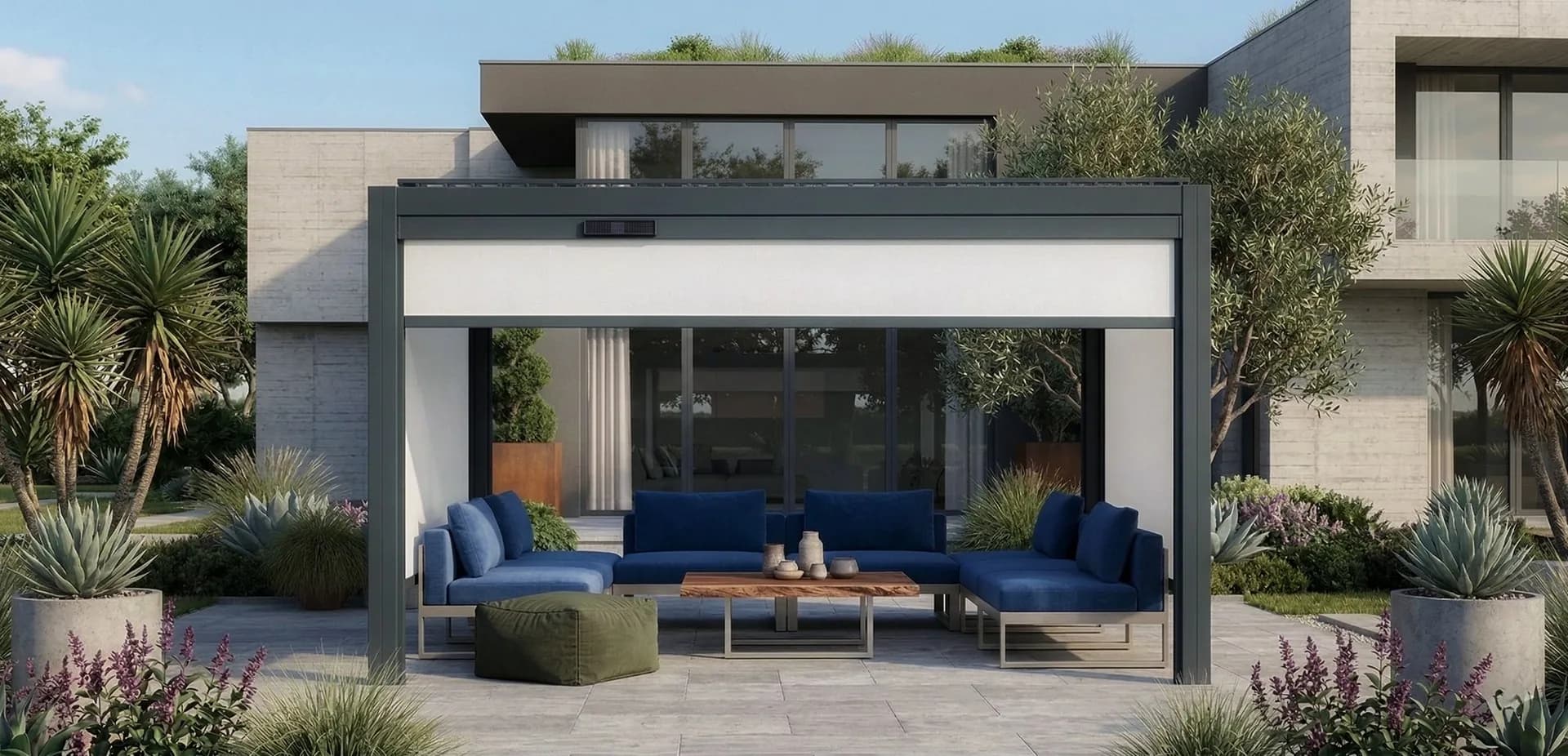
ZIP screens are often sold as a pergola accessory, but the detailing matters. The guide rails should align with the pergola columns, the cassette should remain serviceable, and the screen should not block drainage or lighting access.
When a pergola is still being specified, start from the pergola category and add ZIP screens as side comfort modules. For retractable roof projects, check the Aperio 800 route. For glass veranda projects, use the winter garden category.
For cooling-load and shading impact, run the shading calculator. For sun-angle planning, use the sun-zone planner.
Maintenance and service access
The fabric and ZIP guides need periodic inspection. Dust, pollen, salt and urban particles collect in guide channels and cassette zones. In most residential projects, inspection once or twice per year is enough. Coastal, hospitality and high-use projects need a more disciplined service interval.
Check:
- guide channels are clean and fixed firmly; - the fabric edge runs evenly without twisting; - the bottom bar closes level; - motor limits stop before over-tensioning; - solar panels on 100S units remain clean and exposed to daylight.
Specification checklist
Before quoting a ZIP screen, capture these inputs:
- opening width and height; - wind exposure and building height; - facade orientation; - required privacy and view-through level; - control type: motorised, manual, solar or horizontal top screen; - cassette access for future service; - RAL frame colour and fabric colour; - pergola, veranda or window integration notes.
Conclusion
The strongest ZIP screen specification is not just "motorised exterior shading". It names the exposure, openness factor, control method and service access. That is how the Luxa Tela 100 family stays clear in sales language: Tela 100 for motorised facade shading, Tela 100M for manual projects, Tela 100S for solar retrofit work and Tela 100T for horizontal pergola or veranda top screening.
Project checks before specification
For a reliable LuxaShade proposal, match the article topic with the real site conditions before selecting a product family.
- Confirm span, fixing surface, drainage route and wind exposure for the installation area.
- Compare pergola, zip screen, veranda, carport and railing options against the same opening dimensions.
- Share photos, rough measurements and preferred colour so the dealer can route the request to the right system.
Use the product pages for system details, then contact LuxaShade for a project-specific review.
Explore our product range or get in touch.