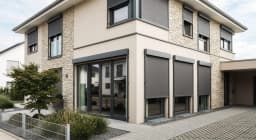
Suitable projects
Projects with a clear use case
- Projects with a clear use case
- Openings or outdoor areas with known dimensions
- Buyers comparing product families before quote
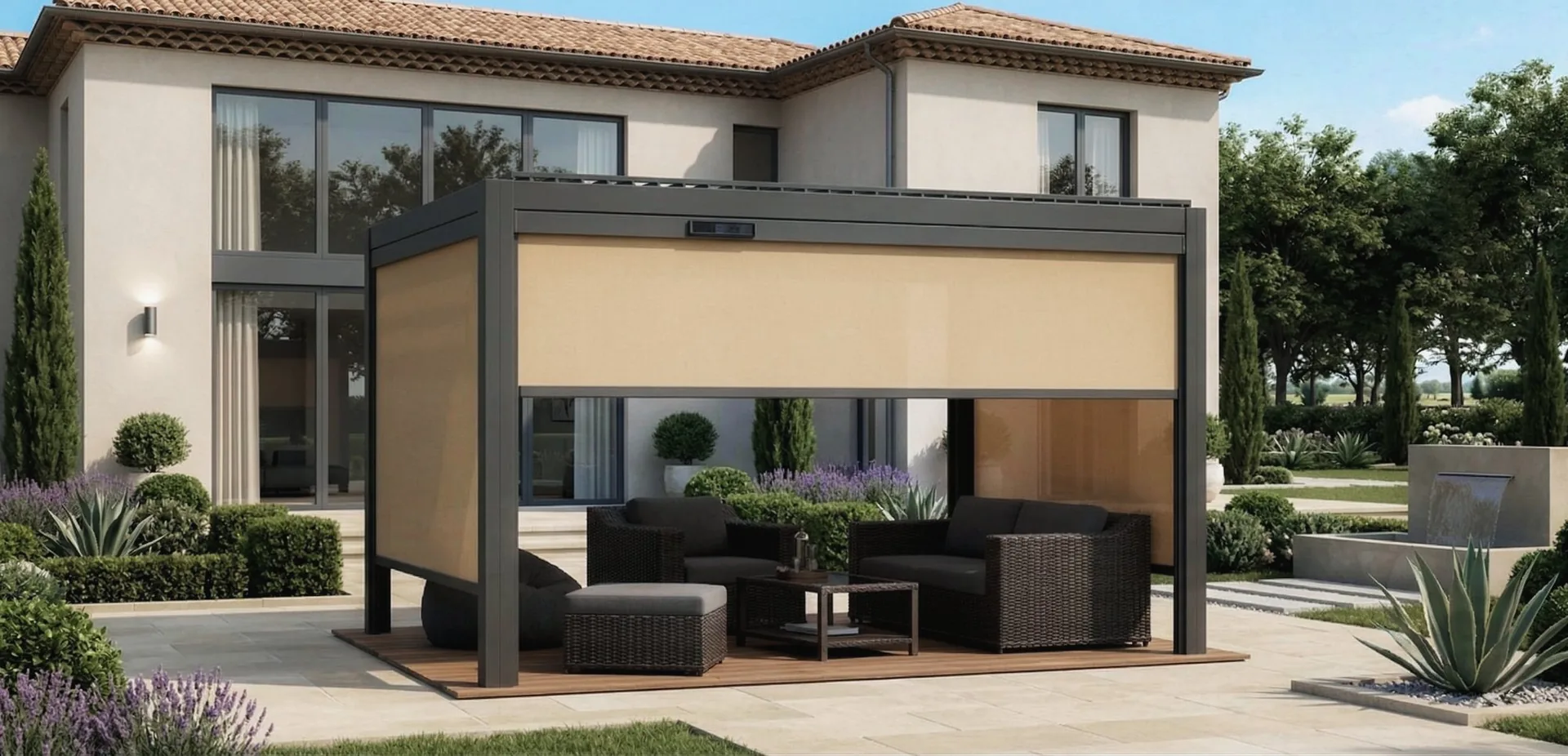
 LUXASHADE
Zip Screens
No wires. No plug. Just sun.
Most zip screens need a 230V cable buried in the wall. The Tela 100S doesn't. A small solar panel on the cassette charges a lithium battery; the same radio control 24V motor that drives the Tela 100 lowers and raises the screen on demand. Battery typically lasts 3-4 weeks of daily use; in summer it never runs out. Ideal for renovations, listed buildings where wall channels are forbidden, or remote terraces where the nearest plug is 30 metres away. Same zip-guided fabric, same EN 13561 wind class 2, same 200+ RAL fabric palette as the wired siblings.
TECHNICAL SPECIFICATIONSUse this product when dimensions, installation conditions, exposure and desired operation are clear enough to move from browsing to quotation.
Projects with a clear use case
Dimensions and fixing surface
Connect the product choice to quote, site assumptions and related systems before budget is locked.
These answers explain where the solar-powered ZIP screen route fits retrofit and hard-to-wire facade projects.
Luxa Tela 100S is best used for retrofit windows, finished facades and pergola sides where running a new power cable would be difficult or disruptive.
Read fabric guide →Check daylight access to the solar panel, opening dimensions, cassette position, fabric openness, wind exposure and whether electric backup is needed.
Estimate shading impact →A wired Tela 100 is usually better for high-use commercial openings, low-sun positions or projects where permanent power is already available.
Review wired screen →APPLICATIONSThe Luxa 100S excels in retrofit and wireless-first scenarios. Existing buildings where routing cables requires cutting into walls, rental properties needing removable…
ACCESSORIES & ADD-ONSSame as Luxa 100: wireless sun/wind sensors, pergola brackets, insect mesh. The entire system — screen, motor, panel, sensors — operates completely wire-free.
FREQUENTLY ASKED QUESTIONSA compact PV panel on the cassette charges a lithium-ion battery. 5–10 full cycles per day even in Northern Europe. Battery backup lasts weeks without direct sunlight.
Yes. The battery stores enough energy for extended operation. Even diffuse winter daylight charges the panel for regular use.
Same ZIP system and frame. 100S = solar + battery (wireless), 100 = mains motor (230V), 100M = manual crank. All interchangeable.
Compact, colour-matched to the cassette frame. Barely visible from ground level.
Ideal when: running cables is impractical/costly, retrofitting existing buildings, rental properties (no permanent modifications), or for completely wireless aesthetics.
Width: 900–4,000 mm. Height: 500–3,500 mm. Max area: 12.5 m².
Positioned between manual 100M and mains 100. Motorised convenience without wiring costs. Ask for pricing from your PONARC dealer.
INSTALLATIONFastest zip screen installation — no electrical wiring at all. Mount cassette, fix guides, insert fabric, solar panel starts charging immediately. Single screen:…
COLOURS & FINISHESAll profiles in any RAL colour. Solar panel housing colour-matched. Square or round cassette.
CARE & MAINTENANCEClean fabric 2–3 times per year. Brush guide channels. Keep solar panel clean — wipe periodically. Battery: 10+ years service life. Fabric replaceable without cassette…