Motorised Zip Screen vs Traditional Blinds: The Complete Comparison.
Discover how motorised zip screens compare to interior roller blinds, venetian blinds, and exterior awnings. Learn about energy efficiency, wind resistance, maintenance, and which solution suits your home or commercial space.
When choosing window treatments for your home or commercial property, the options can feel overwhelming. Motorised zip screens, interior roller blinds, venetian blinds, and exterior awning blinds each offer distinct advantages. This guide compares them across performance, energy efficiency, durability, and cost to help you make an informed decision.
How Zip Screens Work
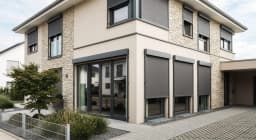
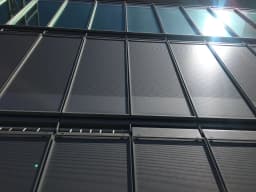
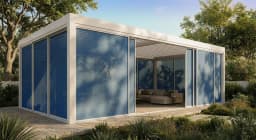
Motorised zip screens like the [Luxa Tela 100M](/en/products/zip-screens/luxa-100m) feature a continuous zip-track guidance system. Instead of a traditional roller mechanism, they use parallel aluminium tracks that guide a reinforced fabric panel up and down. The fabric stays perfectly taut and centred, preventing the billowing, twisting, and jamming common with other systems.
The Luxa Tela 100M uses a quiet electric motor, offering remote control and optional sensor automation (wind, rain, sun, or manual scheduling). For those preferring simplicity, the Luxa Tela 100 provides identical performance with a hand crank. For properties with limited electrical access, the [Luxa Tela 100S](/en/products/zip-screens/luxa-100s) harnesses solar power to eliminate battery changes.
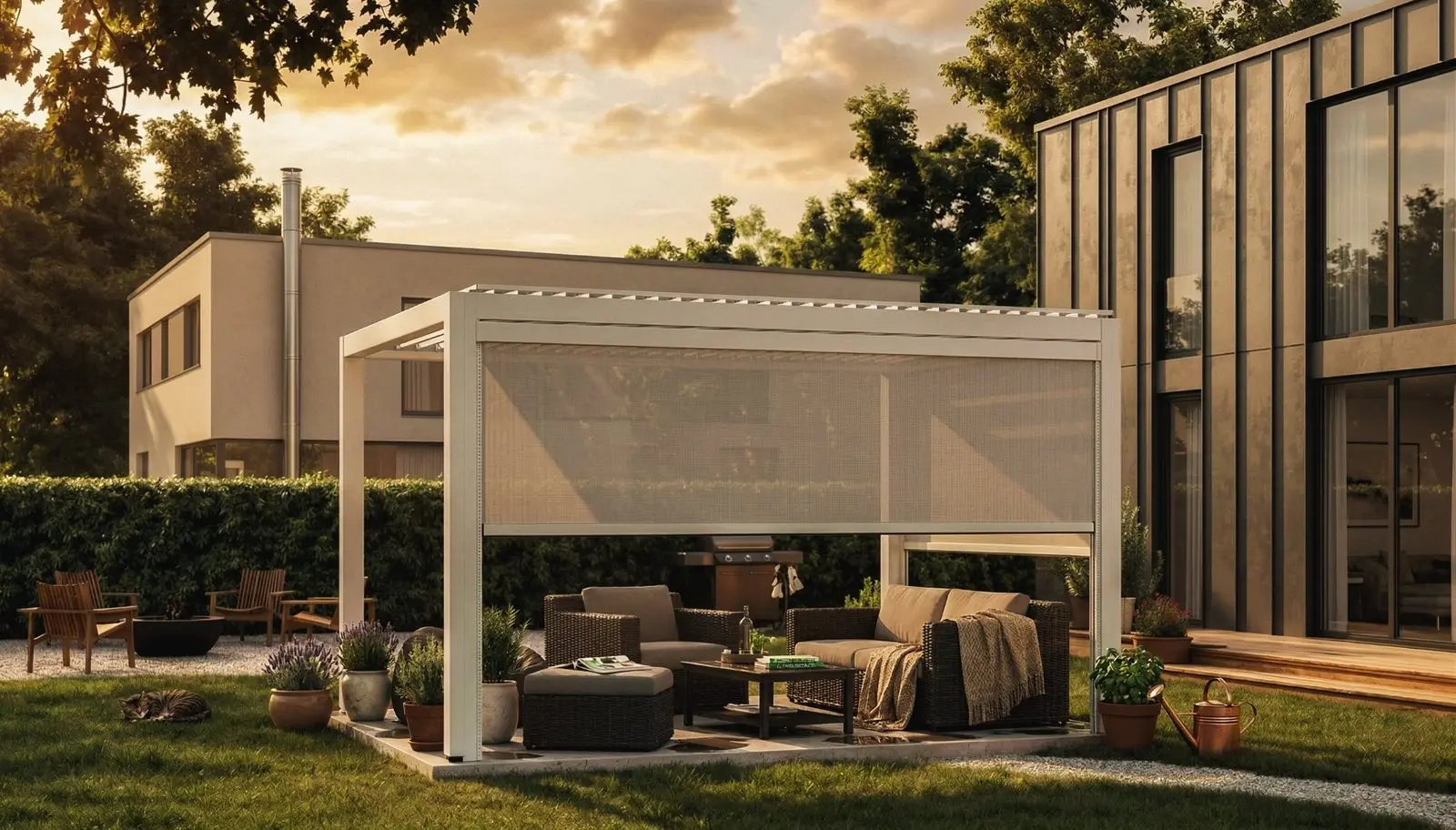
The [Luxa Tela 100T](/en/products/zip-screens/luxa-100t) variant extends this technology horizontally for overhead installations, perfect for pergolas and covered terraces.
Interior Roller Blinds
Interior roller blinds mount on the window frame or wall inside your home. They're compact, affordable, and available in countless fabric colours and patterns. However, they have significant limitations for solar control.
Shortcomings: Because they're installed indoors, the sun passes through your window glass before hitting the blind. The blind then absorbs heat, which radiates back into your room. This reduces cooling efficiency by 50–70% compared to exterior solutions. Gaps around the blind edges allow light and heat to bypass the fabric entirely.
Interior blinds are also prone to dust accumulation, require frequent cleaning, and fade over 2–3 years in direct sunlight. They offer no weather protection and are unsuitable for humid, coastal, or high-wind environments.
Venetian Blinds
Venetian (slatted) blinds offer adjustable light control through rotating horizontal or vertical slats. They're available as interior or exterior variants.
The gap problem: The defining weakness of venetian blinds is their design. Gaps between each slat allow 15–25% of solar radiation to penetrate even when fully "closed." This compromises both privacy and thermal performance. Slats also cast shadows that some find visually cluttered.
Venetian blinds are harder to clean than solid-fabric solutions. Dust settles on each slat, requiring regular wiping. Exterior wooden venetian blinds deteriorate rapidly in wet climates. Even aluminium slats corrode in coastal areas. Motorised versions are expensive but still don't match the energy performance of zip screens.
Exterior Awning Blinds
Exterior fabric awnings mount horizontally above windows or terraces, projecting downward at a fixed angle (typically 45°). They're permanent installations offering good solar protection when the sun is high.
Limitations: Awnings can't adapt to seasonal sun angles. In winter, they block beneficial low-angle sunlight. They're vulnerable to high winds — gusts above 40 km/h risk fabric tearing or structural failure. Most require manual lowering and raising, and fabric typically lasts 5–7 years before UV degradation demands replacement.
Awnings also obstruct views, limit light on overcast days, and are often considered aesthetically dated on modern buildings.
Energy Performance Comparison
This is where zip screens dramatically outperform traditional blinds.
Zip screens: The continuous fabric barrier blocks 85–95% of solar radiation when fully extended. Because they install externally, they prevent heat from entering the building envelope entirely. Studies show zip screens reduce cooling loads by 15–30% — translating to €200–600 annual savings depending on building size and location.
Interior roller blinds: Only block 40–60% of thermal radiation due to indoor installation. Heat absorbed by the blind radiates back into the room, reducing real efficiency to 30–50% of stated performance.
Venetian blinds: With 15–25% light transmission through gaps, thermal performance is 50–70% worse than solid-fabric systems. Slat angle affects performance, but gaps are unavoidable.
Awning blinds: Offer 60–75% solar blocking when properly positioned, but can't adapt throughout the day. Morning and late afternoon sun often bypass them.
Wind & Weather Resistance
The Luxa Tela 100 series excels in harsh conditions. All models feature:
- Wind resistance: Secure up to 50+ km/h without damage or retraction - Fully sealed: The zip-track system eliminates edge gaps, protecting interior spaces even in heavy rain - UV durability: Fabrics rated to block 85–95% of UV rays, with colour retention beyond 8 years - Motorised safety: Optional wind and rain sensors automatically retract the screen if conditions exceed thresholds
Interior roller blinds offer no weather protection. Exterior awnings and venetian blinds deteriorate in sustained wind and rain — fabric tears, brackets corrode, and motors fail prematurely.
Maintenance & Lifespan
Zip screens: Minimal maintenance. Occasional gentle cleaning of the fabric with a soft brush. No slats to dust, no springs or chains to adjust. Motorised components are sealed and low routine care. Typical lifespan: 12–15 years for fabric, 20+ years for structural components.
Interior blinds: Frequent dusting and occasional washing. Fabric fades in 2–3 years. Motorised versions prone to jamming. Lifespan: 3–8 years.
Venetian blinds: Intensive cleaning (each slat). Corrosion on outdoor versions. Slat alignment drifts over time. Lifespan: 5–10 years (interior), 3–6 years (exterior).
Awnings: Annual inspection for fabric tears and rust. Fabric replacement every 5–7 years (€800–2000). Motor failure common after 8 years.
Cost & ROI
Initial investment: - Luxa Tela 100M (motorised zip screen, 2m wide): €1800–2500 - Interior roller blinds (2m wide): €300–800 - Motorised venetian blind (2m wide): €1200–1800 - Exterior awning blind (2m wide): €2000–3500
Operating costs over 10 years: - Zip screens: €0 (fabric replacement optional, €400–600) - Interior blinds: €1000–2000 (replacements and cleaning) - Venetian blinds: €1500–3000 (replacements, repairs, cleaning) - Awnings: €3000–5000 (fabric replacement, motor repairs)
Energy savings: A motorised zip screen in a sunny climate easily recovers its initial cost within 5–8 years through reduced cooling bills — then delivers savings indefinitely. Interior blinds rarely achieve payback.
Which Solution Should You Choose?
Choose a motorised zip screen (Luxa Tela 100M) if: - You want maximum energy savings and year-round comfort - Your property faces south or west (high solar gain) - You value minimal maintenance and long lifespan - You're in a coastal or high-wind area - You want a clean, modern aesthetic with excellent light control
Choose a manual zip screen (Luxa Tela 100) if: - You prefer no electrical installation or ongoing power costs - You're comfortable manual operation (ideal for secondary windows) - You want the same performance as motorised at lower cost
Choose a solar zip screen (Luxa Tela 100S) if: - Electrical infrastructure is unavailable - You value completely autonomous, low routine care operation
Choose interior roller blinds only if: - Budget is extremely limited - Your property has minimal solar gain or excellent insulation - You need purely interior aesthetics with zero weather exposure
Avoid venetian blinds for serious solar control — the gap issue makes them unsuitable for energy-conscious design.
Avoid fixed awnings unless you specifically need permanent shade with a fixed angle (pergola cover, terrasse overhang).
Conclusion
Motorised zip screens represent the modern gold standard for external solar control. The Luxa Tela 100 series delivers superior energy performance, weather resistance, durability, and minimal maintenance compared to traditional blinds and awnings. While initial cost is higher, the 15–30% cooling load reduction pays dividends for years, combined with unmatched comfort, security, and aesthetic appeal.
For architects and homeowners serious about energy efficiency and long-term value, a motorised zip screen is the investment that compounds over time.
Project checks before specification
For a reliable LuxaShade proposal, match the article topic with the real site conditions before selecting a product family.
- Confirm span, fixing surface, drainage route and wind exposure for the installation area.
- Compare pergola, zip screen, veranda, carport and railing options against the same opening dimensions.
- Share photos, rough measurements and preferred colour so the dealer can route the request to the right system.
Use the product pages for system details, then contact LuxaShade for a project-specific review.
Explore our product range or get in touch.