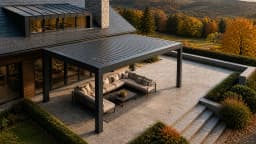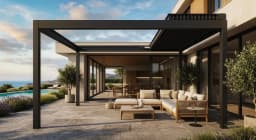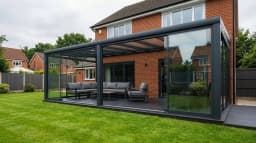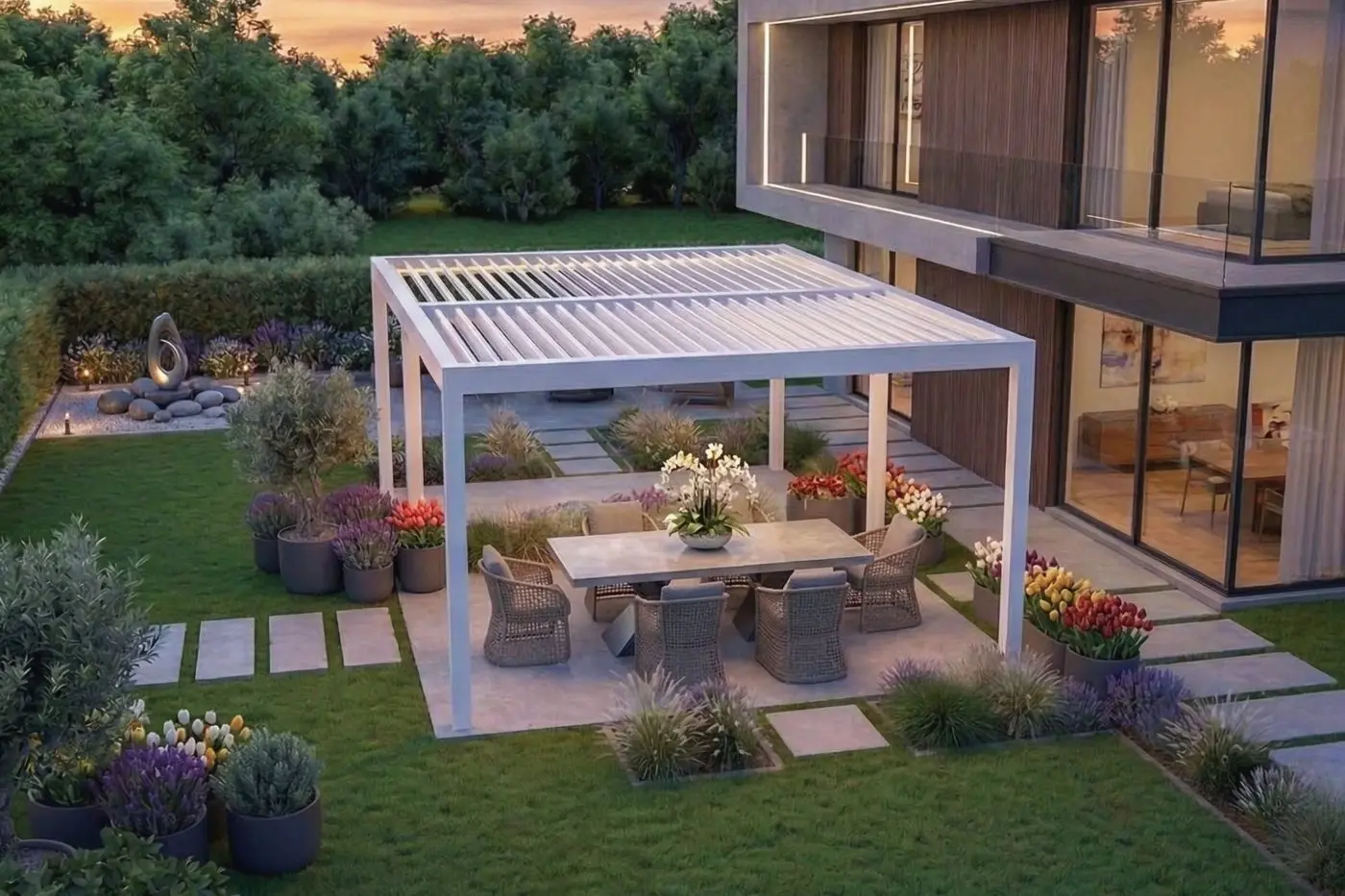
Bioclimatic Pergola vs. Traditional Awning: A Complete Comparison.
Discover the key differences between bioclimatic pergolas (Luxa Sereno 700) and fabric awnings — mechanism, durability, weather resistance, maintenance, cost, and energy performance.
When choosing between a bioclimatic pergola and a traditional fabric awning, the decision impacts your outdoor space for decades. This guide compares the two on every critical factor.
How They Work
Bioclimatic Pergola: Motorised aluminium louvres rotate up to 115°, from fully open (ventilation, light) to fully closed (waterproof canopy). Integrated drainage channels route rainwater through the columns. You control the angle remotely or via sensors.
Fabric Awning: A retractable or fixed fabric canopy (polyester, acrylic, or canvas) stretches over an aluminium or steel frame. When extended, it blocks sun. When retracted, the fabric rolls into a cassette or tube. No rain protection — water runs off the fabric surface.
Durability & Longevity
Bioclimatic Pergola: 25–30+ years minimum. All-aluminium construction resists corrosion, salt spray, and UV. No moving fabric parts to degrade. Louvres can be repaired individually if damaged. Typical lifespan: 30 years with minimal intervention.
Fabric Awning: 8–15 years. Fabric degrades from UV exposure, mildew, and constant flapping. Acrylic lasts longer than polyester. After 10–12 years, colour fading becomes visible. Seams weaken. Motors wear out. Replacement costs €3,000–€8,000.
Winner: Bioclimatic Pergola
Weather Resistance
Bioclimatic Pergola: Fully waterproof when closed. Wind sensors auto-close the louvres at 50+ km/h. You can use your terrace in light rain or even moderate wind. Handles snow loads (regional engineering required). Integrated guttering prevents water pooling.
Fabric Awning: Not waterproof. Fabric sheds water, but heavy rain seeps through seams or saturates the material. Wind can shred the fabric if not fully retracted. Snow load causes sagging. Limited to fair-weather use.
Winner: Bioclimatic Pergola
Maintenance
Bioclimatic Pergola: Virtually zero. Occasional rinse with water removes dust. Annual motor check (quick sensor test). No repainting or fabric treatment needed. Powder coating lasts 15–20 years without touch-up.
Fabric Awning: Regular. Clean the fabric quarterly to prevent mildew (water + algae). Inspect seams annually. Recoat fabric protector every 2–3 years. Motors need seasonal lubrication. Fabric can need replacement mid-life (€5,000–€8,000).
Winner: Bioclimatic Pergola
Energy Performance
Bioclimatic Pergola: Reduces cooling loads by 30–40% in summer by blocking direct solar radiation before it hits adjacent glass. Closed louvres act as a thermal barrier. Heat reflected upward and away from the building. Fc value (solar factor): typically 0.15–0.25 when closed.
Fabric Awning: Reduces glare and surface temperature by ~15–20%. Fabric absorbs some heat (warming the material) but does not prevent heat transmission into adjacent windows. Fc value: 0.30–0.50 depending on colour and weave.
Winner: Bioclimatic Pergola (by a significant margin)
Design Flexibility
Bioclimatic Pergola: Clean, modern aesthetic. Slim aluminium columns (150×150mm or less). Seamless integration with LED lighting, integrated rain gutters, glass side walls, and motorisation. Modular — can extend easily. Multiple colours and finishes (RAL, metallic, wood-effect).
Fabric Awning: Traditional or classic look. Fabric colours and patterns offer visual warmth. Compact when retracted. Less visually imposing on small terraces. Limited integration options for side screens or lighting.
Winner: Depends on architectural style — modern prefers Bioclimatic, traditional may prefer Awning.
Cost Comparison
Bioclimatic Pergola ([Luxa Sereno 700](/en/products/pergolas/luxa-700) equivalent): - Purchase: €15,000–€30,000 (4×4m motorised with standard finish) - Installation: €2,000–€4,000 - Maintenance (30 years): €500–€1,000 (occasional motor service) - 30-year total: €17,500–€35,000 - Cost per year: €580–€1,170
Fabric Awning: - Purchase: €5,000–€12,000 (same size, motorised) - Installation: €1,000–€2,000 - Maintenance (8–10 years): €2,000–€3,000 (cleaning, recoating, repairs) - Fabric replacement at 10 years: €6,000–€10,000 - Second fabric at 20 years: €6,000–€10,000 - 30-year total: €20,000–€37,000 - Cost per year: €670–€1,230
Verdict: Similar 30-year total cost, but Bioclimatic offers better value after year 12 when fabric begins failing. Plus no downtime waiting for fabric repairs.
The Verdict
Choose a Bioclimatic Pergola if: - You want year-round, all-weather use - Energy savings matter (cooling reduction 30–40%) - Low maintenance is a priority - Architectural modernity is important - You plan to keep the structure 20+ years - You need consistent shade in high sun
Choose a Fabric Awning if: - Budget is tight upfront (€5k–€12k vs €15k–€30k) - You live in a mild, dry climate with little rain or wind - You prefer traditional or rustic aesthetics - You're willing to do seasonal cleaning and maintenance - The space is only used seasonally - Visual lightness and retractability matter
For most residential and commercial applications in northern Europe, a bioclimatic pergola delivers superior performance, durability, and long-term value.
Project checks before specification
For a reliable LuxaShade proposal, match the article topic with the real site conditions before selecting a product family.
- Confirm span, fixing surface, drainage route and wind exposure for the installation area.
- Compare pergola, zip screen, veranda, carport and railing options against the same opening dimensions.
- Share photos, rough measurements and preferred colour so the dealer can route the request to the right system.
Use the product pages for system details, then contact LuxaShade for a project-specific review.
Explore our product range or get in touch.