·8 min read
Solar Carport Integration: Panels, Mounting and ROI Analysis.
How to integrate solar panels with aluminium carport structures. Panel types, mounting systems, electrical requirements and payback calculations.
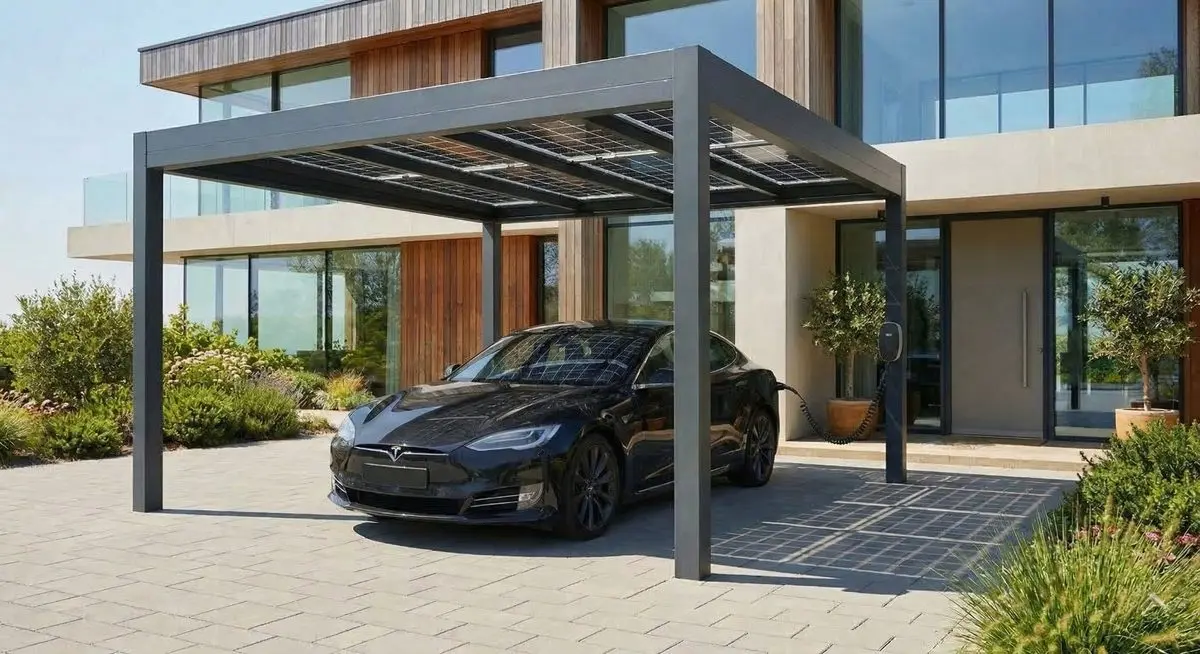
Panel Types for Carport Applications\n\nMonocrystalline panels (400-500W per panel, 20-22% efficiency) are the standard choice for carport roofs, offering the best power density for the available area. Bi-facial panels capture reflected light from the ground surface below, generating up to 30% additional energy compared to standard panels depending on ground albedo. Semi-transparent BIPV (Building-Integrated Photovoltaic) panels transmit 40-60% of visible light while generating electricity, providing a balance between shade function and power production.\n\n## Structural and Mounting Requirements\n\nSolar panel integration adds approximately 12-15 kg/m2 to the carport roof load. Aluminium carport structures must be engineered to support this additional weight plus wind uplift and snow loads per EN 1991. Panel mounting rails attach to the carport purlins using stainless steel clamps with rubber isolation to prevent galvanic corrosion. Optimal panel tilt angle varies by latitude: 30-35 degrees for central Europe, 25-30 degrees for southern Europe. PONARC carport structures are available with factory-integrated solar mounting rails.\n\n## Electrical Integration\n\nGrid-connected solar carports require an inverter to convert DC panel output to AC mains supply. String inverters (3-10kW) serve standard residential carports while micro-inverters on each panel optimise output when partial shading occurs. Battery storage systems (5-15kWh typical residential) enable stored energy use during evening hours. EV charging integration using the solar generation directly provides the highest value use of the produced electricity.\n\n## ROI and Payback Analysis\n\nA typical 20m2 solar carport generates 3000-4500 kWh annually in central Europe, valued at 900-1500 euros at current retail electricity prices. System cost including panels, inverter, and electrical connection ranges from 6000-12000 euros. Payback period typically falls between 6-9 years. With EV charging integration, the effective payback reduces to 4-6 years due to the higher value of displaced transport fuel costs. Government incentives and feed-in tariffs further improve the financial case.
Project checks before specification
For a reliable LuxaShade proposal, match the article topic with the real site conditions before selecting a product family.
- Confirm span, fixing surface, drainage route and wind exposure for the installation area.
- Compare pergola, zip screen, veranda, carport and railing options against the same opening dimensions.
- Share photos, rough measurements and preferred colour so the dealer can route the request to the right system.
Use the product pages for system details, then contact LuxaShade for a project-specific review.
Explore our product range or get in touch.